How Is The Small Intestine Designed To Absorb Digested Food: The small intestine is an important part of the human body. The Small Intestine plays a major role in the digestive process by breaking down food into its vital components. Moreover, it is responsible for absorbing the digestive nutrients into the bloodstream. Here in this blog, you will find the functionality of the small intestine. Come along to get to know about each and everything related to it. Reading this blog is worth considering till the end.
What is the Small Intestine?
The Small intestine is a long coiled and tube-like organ in the digestive system. It is located between the stomach and the large intestine. The key role of it is to digest food and absorb nutrients, vitamins and minerals into the bloodstream. This organ is approximately 20 feet (6 METRES) in Length in adults.
How Many Parts are of the Small Intestine?
The small intestine is divide into three parts including Duodenum, Jejunum, and Ileum.
- Duodenum: It is the first part of the small intestine where most chemical digestion happens. This part receives digestive enzymes from the pancreas and bile from the liver. Then it will break down the essential nutrients such as Proteins, Fats and Carbohydrates into simpler molecules.
- Jejunum: It is a middle section that focuses on nutrient absorption. The walls are lined with millions of finger-like projections known as Villi and a small structure called as Microvilli. It increases the surface area for efficient absorption.
- Ileum: The last section of the small intestine absorbs the remaining nutrients, such as Vitamin B12 and Bile Salts. This part is connect to the large intestine by the ileocecal valve, which regulates the movement of food materials and prevents backflow.
What are the Common Symptoms of Small Intestine Conditions and Diseases?
- Belly pain
- Bloated stomach
- Constipation
- Diarrhea
- Nausea and vomiting
- Unexplained weight loss
What Common Diseases May Disturb the Small Intestine?
- Celiac disease
- Crohn’s disease
- Enteritis
- Gastrointestinal neuroendocrine tumor
- Irritable bowel syndrome (IBS)
- Malabsorption
- Meckel’s diverticulum
- Peptic ulcer disease
- Scleroderma
- Small bowel obstruction
- SIBO
Key Function: How Is The Small Intestine Designed To Absorb Digested Food?
- Digestion: It Breaks down food materials into simple molecules such as amino acids, glucose, and fatty acids.
- Absorption: It transfers these nutrients into the bloodstream and lymphatic system for the body to use.
- Transportation: It moves to some extent digested food through rhythmic muscle contractions called peristalsis.
How Is The Small Intestine Designed To Absorb Digested Food?
The absorption in the small intestine involves several steps. For instance, the breakdown of food into small simpler molecules, and the transportation of these molecules into the circulatory and lymphatic systems.
Absorption of Carbohydrates
The small intestine breakdown the carbohydrates into simple sugars like glucose and fructose with the help of enzymes. Amylase is released from the pancreas and the brush border enzyme. Further, the sugars are absorbed into the bloodstream through active transport and facilitated diffusion.
Absorption of Proteins
The proteins are broke down into amino acids by Trypsin and chymotrypsin. These enzymes are release from the pancreas. The amino acids are absorb into the bloodstream through active transport.
Absorption of Fats
Fats are blended with bile and broken down into fatty acids and monoglycerides pancreatic lipase. The smaller molecules are broke down into the lacteal within the villi. After that, it enters the lymphatic system before it reaches to bloodstream.
Absorption of Vitamins and Minerals
- Water-soluble vitamins are absorbed directly into the blood.
- Fat-soluble vitamins are absorb with fats.
- Minerals like calcium and iron are absorb based on the needs of the body.
Structural Adaptation for Absorption: How Is The Small Intestine Designed To Absorb Digested Food?
Length and Folds
- The length of the small intestine is around 20 feet long which is quite a large area for food to interact with absorptive surfaces. How ever, the absorption efficiency is not just about the length but also has numerous folds named plicae circulars which increases the available surface area.
- The falls are permanent structure that makes the movement of food slow and ensure more time for absorption.
- Its increased surface area is important because it gives a greater number of nutrients to be absorb simultaneously.
Villi
- Villi are very tiny finger-like projections lining the walls of the small intestine. The primary role of it is nutrient absorption. Villi is about 0.5 to 1.6 MM long.
- A network of capillaries ensures the absorption of water-soluble nutrients like glucose, amino acids and water-soluble vitamins.
- A lacteal focuses on lytic vessels that absorb fat and fat-soluble vitamins.
Microvilli
- Microvilli are the exterior of the epithelial cells lining the villi. They look like a hair-like projection. They formed the brush border, which increases the surface area for absorption.
- The brush powder has enzymes like lactase, sucrase, and maltase. They help in breaking down the carbohydrate into simple sugars.
- Microvilli increase the surface area of the small style by about 600 times which makes the absorption level high and efficient.
- Thin epithelial layer
- The cells lining the villi are just one cell thick which reduces the distance that nutrients travel to enter the bloodstream or lymphatic vessel. Indeed, this adoption increases the diffusion and active transport processes.
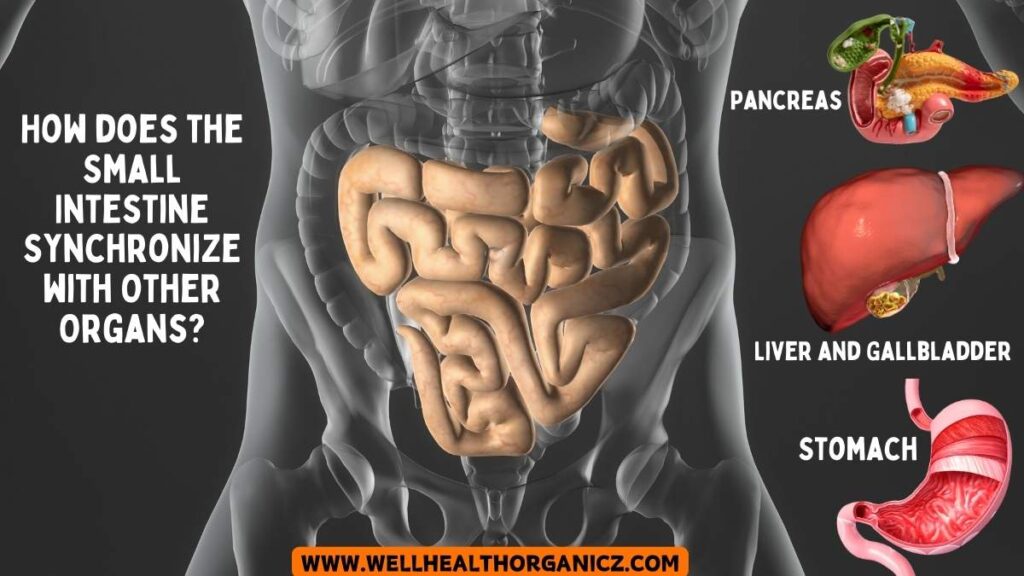
How does the Small Intestine Synchronize with Other Organs?
The small intestine works together with other digestive organs to ensure efficient digestion and absorption.
Pancreas
It creates digestive enzymes like amylase, lipase and proteases. They break down food into absorbable molecules. Moreover, it produces bicarbonate to neutralise the acid of the stomach and creates an optimal pH for enzyme activity.
Liver and Gallbladder
The liver produces bile juice, which is stored in the gallbladder. Then it is release into the duodenum. Bile juice blends fats, which help in absorption.
Stomach
The stomach digests the food partially and releases it in small quantities into the duodenum.
Specialized mechanism of nutrients suppliers: How Is The Small Intestine Designed To Absorb Digested Food
Nutrient absorption in the small intestine has a different transport mechanism :
- Passive Diffusion: It is small and non-polar molecules that diffuse directly across cell membranes.
- Facilitated Diffusion: It is a large molecule that requires carrier proteins to move across the membrane.
- Active Transport: The nutrients like glucose and amino acids are absorbed with the help of a concentration gradient using energy.
- Endocytosis: It is large molecules that are absorb through endocytosis.
Final Words
It is a vital organ in the digestive organ and supports the overall health of the body. The small intestine focuses on breaking down food and absorbing nutrients into the bloodstream. It is design for efficient absorption to maintain a healthy body. It takes up to 5-6 hours to digest the food. Drinking and eating well makes your small intestine healthy. If your small intestine is not healthy then you may face critical issues like constipation, belly pain, diarrhoea, and even typhoid. So keep your small intestine healthy!
Frequently Asked Questions
Ans: It is a tube-like organ that is in charge of processing food and absorbing food into the veins.
Ans: They are divide into three parts Duodenum, Jejunum and Ileum.
Ans: The small intestine is about 6 meters (20 feet) long in adults.
Ans: Carbohydrates, proteins, vitamins, minerals, water and electrolytes.
Ans: The small intestine has three main functions such as digestion, absorption, and transportation.
Ans: 1. Eat foods that are rich in fibre grains, fruits and vegetables.
2. Drink almost 3 to 4 litres of water for healthy intestine.
3. Don’t smoke and consume alcohol.
Ans: The length provides a large surface area for nutrient absorption. Moreover, it consists of folds, villi and microvilli that expand the exterior area for more absorption.
Ans: The small intestine is long and focuses on digesting food and nutrient absorption. Whereas, the large intestine is smaller and emphasizes absorbing water and making waste.